
· Michael Blair
A used car is sold on how it presents. The mechanical condition matters and the records matter, but the first thing a buyer or an appraiser sees is the paint, the wheels and the state of the interior, and a car that looks cared for is assumed to have been cared for. A pre-sale detail is the highest-return thing most sellers can do, and it is also the one most often overdone; the right detail for a car being sold is different from the right detail for a car you are keeping.
What actually moves the offer
The interior first. A buyer opens the door before they walk around the car, and a stained seat, a smell, or crumbs in the console cost more than any scratch on the outside. Carpet and upholstery extraction, a proper clean of every plastic and vinyl surface, the headliner, the door jambs and the trunk is the core of a pre-sale detail. Odor removal, including smoke and pets, is the item that changes a car from unsellable to sellable at a private sale.
Outside, a thorough wash, a clay treatment to get the bonded contamination off, and a polish to remove light swirls and bring the gloss back does most of the work. Clean wheels and dressed tires matter out of proportion to their cost, and so does glass that is clean inside and out, because it is what the buyer looks through on the test drive.
What to skip
A ceramic coating on a car you are selling is money spent for the next owner. A multi-stage paint correction to chase every scratch is more than a buyer will pay for. Repairing every rock chip, replacing a slightly worn floor mat set, and having the headlights restored are all worth it only if the car is otherwise in very good condition and the price reflects it; on an ordinary car, they do not return their cost.
Do not use silicone dressings that leave the dash and the seats shiny and slippery. Buyers read a glossy interior as a car that has been dressed up to hide something, and dealers know exactly what a greasy dashboard means. A matte, clean finish reads as honest.
- Do: interior extraction, odor removal, jambs, trunk, glass, wheels
- Do: wash, clay, one-step polish, tire dressing
- Skip: ceramic coating, full paint correction, every chip
- Skip: shiny dressings, air fresheners that announce themselves
Dealer trade-in versus private sale
A dealer appraiser values a trade on what it will cost them to recondition and what the auction or the lot will bring. A clean car saves them reconditioning cost and they know it, but they also expect to detail it anyway, so a full detail returns less at a trade than at a private sale. A thorough wash, vacuum and interior wipe-down, with the personal belongings removed and the smell dealt with, is the right level for a trade; it removes the excuse for a deduction without paying for work the dealer will redo.
At a private sale, the buyer is paying for the car as it stands, and the full pre-sale detail pays. It is what the listing photos show, it is what the buyer sees in the driveway, and it is the difference between a first offer near the asking price and one that opens with a list of things wrong.
Timing and the photos
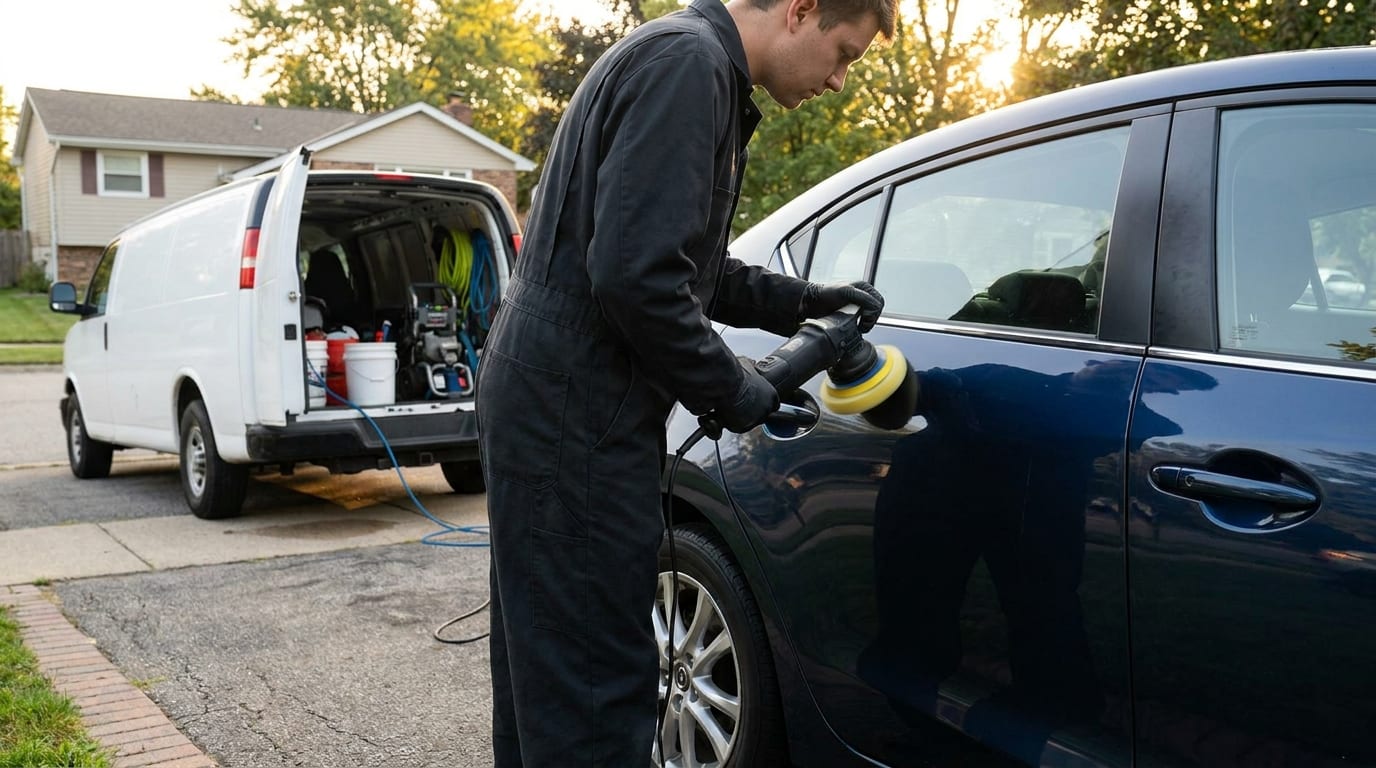
Detail the car a day or two before the photographs and keep it garaged or covered until the listing is up. Photograph it clean and dry in open shade or early light, on a plain background, with the interior shots taken with the doors open and the seats visible. A detailer who works mobile will come to the house, do the car in the driveway, and it can be photographed on the spot.
Between the listing and the sale, keep it clean. A quick rinse before each showing, and a vacuum if it has been driven, keeps the impression the detail created. Have the service records in a folder on the passenger seat; a clean car with paperwork is the combination buyers pay for.