
· by Michael Blair, Nashville's Mobile Detailing
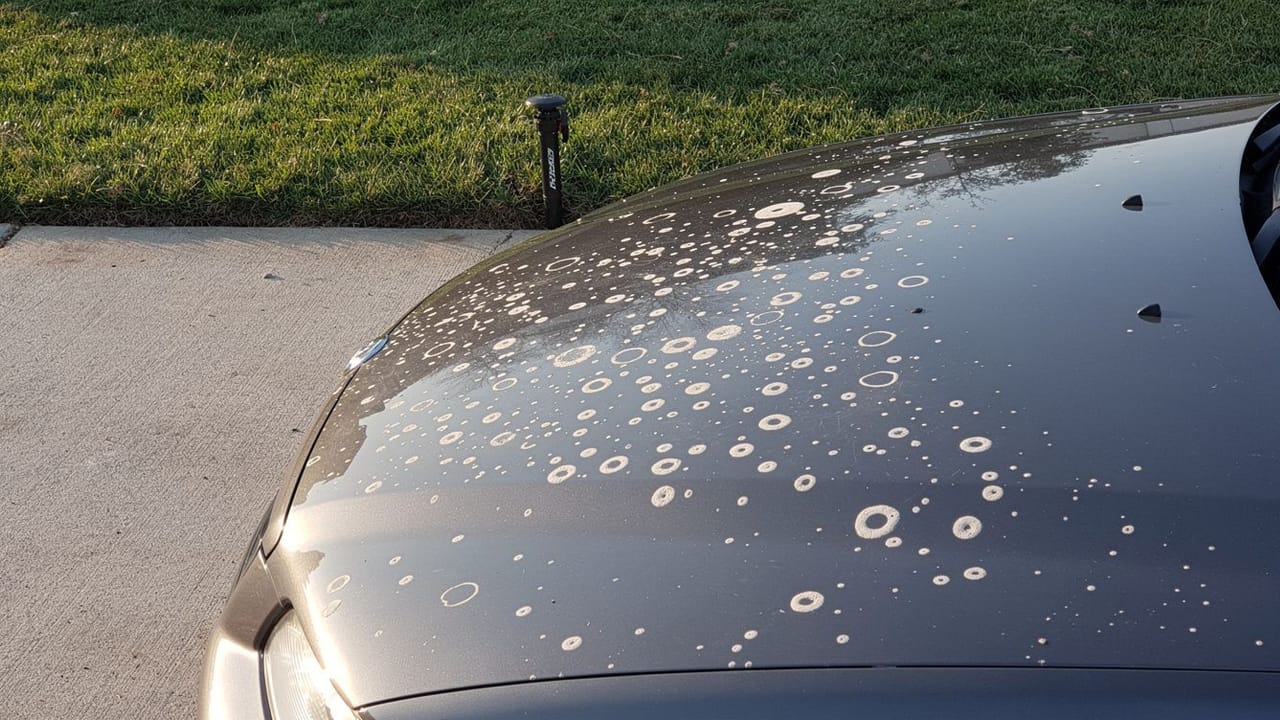
The white rings on a hood after a rinse, a sprinkler or a foggy morning are not dirt that was missed. They are what was dissolved in the water, left on the paint when the water itself evaporated. Every drop carries some, so the only reliable way to avoid the spots is to keep water from drying on the car in the first place. Here is what is in the water around Nashville, what carmakers say the rings can do to a finish, and how we run an exterior detail so they do not form.
What leaves water spots on a car?
Water spots on a car are minerals that stay behind after a drop of water dries. Mazda’s owner’s manual for the CX-5 names rain, fog, dew and tap water as carrying minerals such as salt and lime, and says that as moisture dries on the body, those minerals concentrate and harden into white rings. The bigger the drop and the slower it dries, the more ring it leaves.
Nashville’s tap water has a measurable load of them. Metro Water Services’ 2025 water quality report lists total dissolved solids at an average of 146 milligrams per liter, between 128 and 189 across its samples, which is well inside the 500 the report lists as the secondary standard. The same report puts calcium hardness at an average of 75.3 mg/L. None of that is a problem to drink. It is simply what is left on the paint when a hose rinse, a sprinkler or a wash dries in the sun.
Can water spots damage car paint?
Water spots can damage car paint, according to the carmakers, which is why they are worth removing rather than waiting out. Mazda’s manual says the rings can harm the finish and tells owners to wash and wax as soon as they find water marks. It gives no number of days, and neither do we, because how fast a ring does harm depends on the water, the heat and how long it sits.
What we can tell on the day is whether a spot is still sitting on top. A ring that lifts with a proper wash and decontamination was only a deposit. A ring that is still visible in the clear coat after that has marked the surface, and getting it out means machine polishing, which is the work our paint correction covers. We look at the paint under good light and tell you which you have before anything is polished, since polishing takes clear coat off and is not something to do for a spot that would have washed away.
How do you wash a car without leaving water spots?
Washing a car without water spots comes down to never letting water or soap dry on the paint by itself. Kia’s owner’s manual tells owners not to let soap dry on the finish, to use lukewarm or cold water rather than hot, and not to wash in direct sunlight or while the body is still warm. A hot hood in July can dry a rinse before you reach it with a towel, and that is how a careful wash ends in spots.
So we park the work in shade where the driveway allows, start on a cool car, and wash and rinse a section at a time instead of soaping the whole car and rinsing it all at the end. Each panel gets dried right after its rinse, with a blower or a plush microfiber towel, the same drying we describe in washing a car without putting swirls in. Glass, mirrors and the trim around them get the same attention, because a drip running out of a mirror housing after the car is dry is a common source of a fresh streak of rings.
Why water spots keep coming back between washes
Water spots return between washes because the car keeps getting wet from sources nobody dries. A lawn sprinkler that reaches the driveway lays tap water on the same side of the car every morning, and Mazda’s list of mineral-carrying water includes dew and rain as well as the hose. Moving the car out of the sprinkler’s reach, or turning the head, does more than any product.
A protected finish makes the rest easier. Mazda’s advice is to wash and wax, and on our exterior detail the wash is followed by a sealant or, on request, wax, so water beads and rolls off instead of sitting in flat drops. That does not make the paint immune, and in a Tennessee summer the sun works on any finish, as our post on what Nashville sun and pollen do to paint explains. It does mean a spot that lands is easier to lift at the next wash. To have us look at the rings on your car and wash it at your home or office, ask for a free quote.
Sources
- Mazda USA, 2019 CX-5 Owner’s Manual, Exterior Care: environmental hazards — Rain, fog, dew and tap water carry minerals such as salt and lime that harden into white rings as moisture dries; the rings can damage the finish; wash and wax as soon as water marks are found
- Kia, Owner’s Manual, Exterior care: general caution — Do not let soap dry on the finish; use lukewarm or cold water; do not wash in direct sunlight or while the body is warm
- Metro Water Services, 2025 Water Quality Report — Total dissolved solids 146 mg/L (128 to 189) against a 500 mg/L secondary standard; calcium hardness 75.3 mg/L (63.9 to 92.6)
FAQ
Water Spots on a Car: What Nashville Water Leaves — questions
What causes white water spots on a car?
Minerals in the water. Mazda’s owner’s manual says rain, fog, dew and tap water carry minerals such as salt and lime, which concentrate and harden into white rings as the water dries on the body. Metro Water’s 2025 report puts Nashville tap water at an average of 146 mg/L of dissolved solids.
Can hard water spots ruin a car’s clear coat?
They can harm the finish, according to Mazda’s owner’s manual, which tells owners to wash and wax as soon as they notice water marks. Neither the manual nor we put a time on it. A ring that survives a proper wash and decontamination has marked the clear coat and needs machine polishing to remove.
Should you wash a car in the sun?
No. Kia’s owner’s manual says not to wash in direct sunlight or while the body is warm, and not to let soap dry on the finish. Heat dries soap and rinse water before they can be wiped off, which leaves spots. We wash in shade on a cool car and dry each panel right after rinsing.
Why does my car have water spots after washing it?
Usually because the rinse water dried on its own before it was wiped off, or a drip ran out of a mirror or trim after drying. Washing in the sun or on a warm hood makes it worse. Dry each panel right after rinsing, and check the mirrors and trim last.