
· by Michael Blair, Nashville's Mobile Detailing
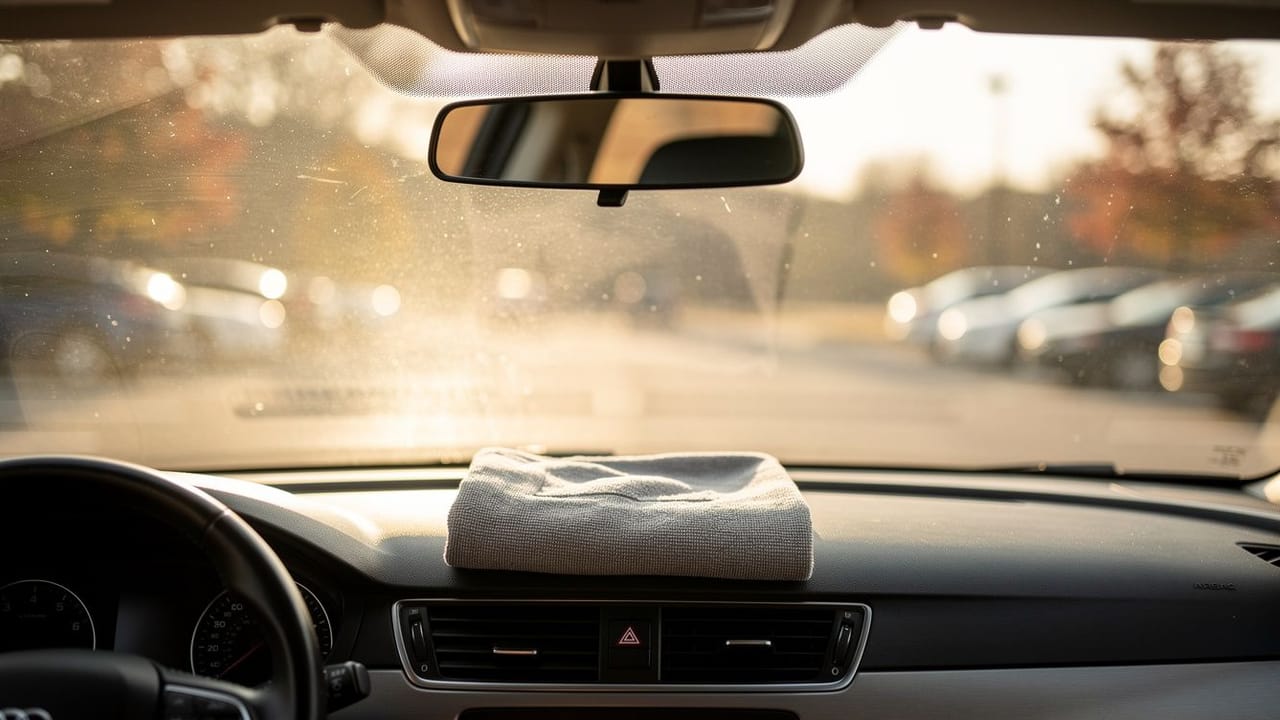
The haze on the inside of the windshield is easy to miss until the sun sits low in front of you or a pair of headlights comes over a hill. Then the whole pane glows. It is not dust, and it is not something you did. It comes from inside the car itself.
Here is what the film is, how the carmakers say to clean it off, the two places where cleaning can do damage, and why it keeps coming back.
What is the film on the inside of a windshield?
The film on the inside of a windshield is mostly a deposit from the car’s own interior materials, which release compounds that settle on the glass. The auto industry has a name for it, fogging, and a test for it. SAE International’s recommended practice J1756 measures how much an interior material tends to produce a light-scattering deposit on glass. It was first issued in 1994 and revised in April 2026.
The testing lab Intertek describes the fogging test as a measure of how readily plastic or rubber materials give off substances that condense on other surfaces. A sample is heated in a sealed beaker under a cooled glass or foil cover for three or 16 hours, and the haze or the weight left on the cover is measured. A dashboard warming under a windshield in a parked car is a close match for that setup.
How do you clean film off the inside of a windshield?
You clean film off the inside of a windshield with a glass cleaner and clean towels, used as the cleaner’s label directs. Kia’s owner’s manual page on cleaning interior glass says that when the inside glass gets an oily, greasy or waxy film, it should be cleaned with a glass cleaner, following the directions on the container.
How we do it: one towel dampened with cleaner and a second, dry one to buff, changed as soon as they load up. We spray the towel rather than the glass. The bottom few inches of a windshield, where the glass meets the dash, are hard to reach and usually the dirtiest, so we work them with a towel wrapped around a pad on a handle. Swirls left behind show up in low sun, so we finish with straight passes in one direction.
Where can cleaning the inside glass do damage?
Two places: the rear window and the area behind the rearview mirror. Kia’s manual says not to scrape or scratch the inside of the rear window, because that can damage the defroster grid, the thin lines printed on the glass. The Honda owner’s manual for the 2023 Accord says to wipe along the same direction as those wires with a soft cloth so they are not damaged.
The same Honda page warns against getting water or glass cleaner on or around the cover of the electrical components near the rearview mirror. On many newer cars that housing holds cameras and sensors that look through the windshield, which is the reason we never spray the glass there. Honda also cautions that some chemicals and liquid fragrances can discolor or crack interior plastic, and says to wipe any chemical away with a dry cloth after use.
Why does the film keep coming back?
The film keeps coming back because its source is the interior, and the interior keeps giving it off. Carmakers can choose materials that fog less, but cleaning only removes what has built up so far, not what the dash and trim release next.
That is why the inside of every pane is part of our interior detail, not an extra. A windshield done every visit never builds up the heavy layer that smears when you first try to wipe it. Our post on interior detailing in a humid climate covers the rest of the cabin. If the glass glares at you on the drive home in Murfreesboro or anywhere nearby, book an interior detail and we will come to the car.
Sources
- SAE International, J1756_202604: Determination of the Fogging Characteristics of Interior Automotive Materials — Recommended practice measuring the tendency of interior materials to produce a light-scattering deposit on glass; issued December 1994, revised April 2026.
- Intertek, Fogging Characteristics of Interior Automotive Materials (SAE J1756, ISO 6452, DIN 75201) — Plastics and elastomers volatilize substances that condense on other surfaces; heated sample under a cooled glass or foil cover for 3 or 16 hours.
- Kia owner’s manual (2024), Cleaning the interior window glass — Oily, greasy or waxy film cleaned with glass cleaner per its directions; do not scrape or scratch the inside of the rear window.
- Honda, 2023 Accord Owner’s Manual, Interior Care — Wipe glass with glass cleaner along the direction of the rear window wires; keep fluids off the electrical components around the rearview mirror; chemicals can discolor resin parts.
FAQ
Film on the Inside of the Windshield: The Cause — questions
What causes film on the inside of a windshield?
Mostly the car’s own interior. Plastics, rubber and other interior materials give off compounds that condense on the glass, which the industry calls fogging. SAE International publishes a recommended practice, J1756, for measuring how much an interior material tends to leave a light-scattering deposit on glass.
Can you use glass cleaner on rear defroster lines?
Some carmakers say yes, with care. Honda’s 2023 Accord manual says to use glass cleaner and wipe along the same direction as the defroster wires with a soft cloth. Kia’s manual says not to scrape or scratch the inside of the rear window, since that can damage the grid. Check your own manual first.
Is it safe to spray cleaner near the camera behind the rearview mirror?
No. Honda’s owner’s manual warns against spilling water or glass cleaner on or around the cover of the electrical components near the rearview mirror. Spray the cleaner onto a towel instead, then wipe that part of the windshield carefully so no liquid runs into the housing.
Why does my windshield look hazy at night?
A film on the inside of the glass scatters light, so oncoming headlights and streetlights spread into a glow. Kia’s owner’s manual describes this oily, greasy or waxy interior film and says to remove it with glass cleaner. Because the interior keeps releasing it, the film returns, so it needs cleaning regularly.