
· by Michael Blair, Nashville's Mobile Detailing
October in Middle Tennessee means cars parked in driveways and on streets under oaks, maples and sweetgums, collecting leaves every night and rain every few days. A dry leaf on the paint does nothing. A wet one left for days leaves a stain in its own outline, and the leaves that slide down into the channel below the windshield or around the sunroof end up blocking drains most owners do not know exist. The damage shows up later as water on the floor, a damp headliner or a musty smell the first morning the heat comes on.
Leaf stains on the paint
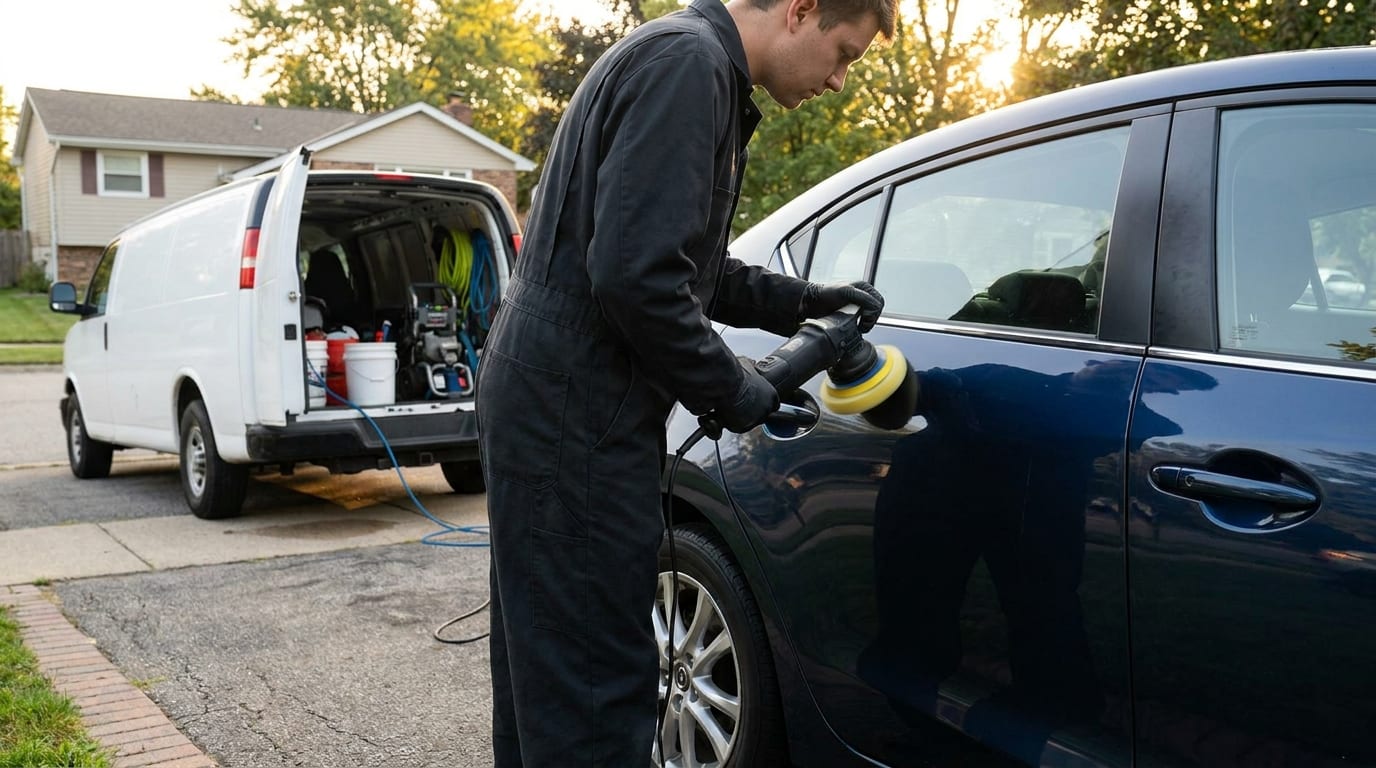
Leaves contain tannins that leach out when they are wet. A leaf stuck to a hood or roof through a couple of rainy days can leave a brown or gray shadow of itself, most visible on white, silver and other light colors. Caught early, it is a surface stain that washes or polishes off. Left through weeks of sun and rain, the acids etch into the clear coat and take machine polishing to remove. Horizontal panels get the worst of it, because that is where leaves lie flat and hold water against the finish.
The simplest prevention is brushing leaves off before they stick, and keeping a sealant or coating on the paint so the tannins sit on top of the protection rather than in the clear coat. Acorns and sweetgum balls dropping from overhead trees are a separate nuisance: they are small, hard, and leave dings in the thin roof and hood panels on some cars.
The cowl and the water it is meant to shed
Below the windshield, under the plastic panel the wipers sit on, is the cowl. It catches water running off the glass and drains it out through openings to the wheel wells. The fresh air intake for the heating and cooling system usually sits in that same area. When leaves pack into the cowl, water backs up and finds another way in, often through the intake and onto the passenger floor.
Clearing the cowl means lifting the wipers, removing debris from the channel by hand or with a vacuum, and on some cars removing the panel itself. We do it as part of a fall detail, because a wet passenger carpet in October is a mildew problem by Thanksgiving.
Sunroof drains and wet headliners
A sunroof is not sealed against water. It sits in a tray with a drain at each corner, and small tubes run from those drains down through the roof pillars to exit under the car. Leaves, pine needles and pollen from spring wash into the tray and block the tubes, and the next heavy rain overflows the tray into the headliner.
Clearing a drain takes a length of flexible trimmer line or a gentle stream of water, not a blast of compressed air at full pressure. High pressure can push a tube off its fitting inside the pillar, and then every rain goes straight into the car.
- A damp or stained headliner near a front corner
- Water on the floor after rain with no obvious leak
- Water in the spare tire well or the trunk
- Windows that fog up inside and will not clear
- A musty smell that is worse after rain
The cabin air filter and the first heater smell
Most modern cars have a cabin air filter behind the glove box or under the cowl, and it catches leaves, pollen and dust on the way into the vents. A summer of Nashville pollen and a fall of leaf debris, damp from humid nights, can leave that filter musty. The first cold morning you turn on the heat, the smell comes through every vent.
Replacing the cabin filter in the fall, on the schedule in the owner’s manual or sooner if the car parks under trees, takes care of most of it. If the smell is sour and stays after a new filter, water has probably reached the carpet padding, and it needs extraction and a proper drying rather than a scent.